
Flashnote Commentary
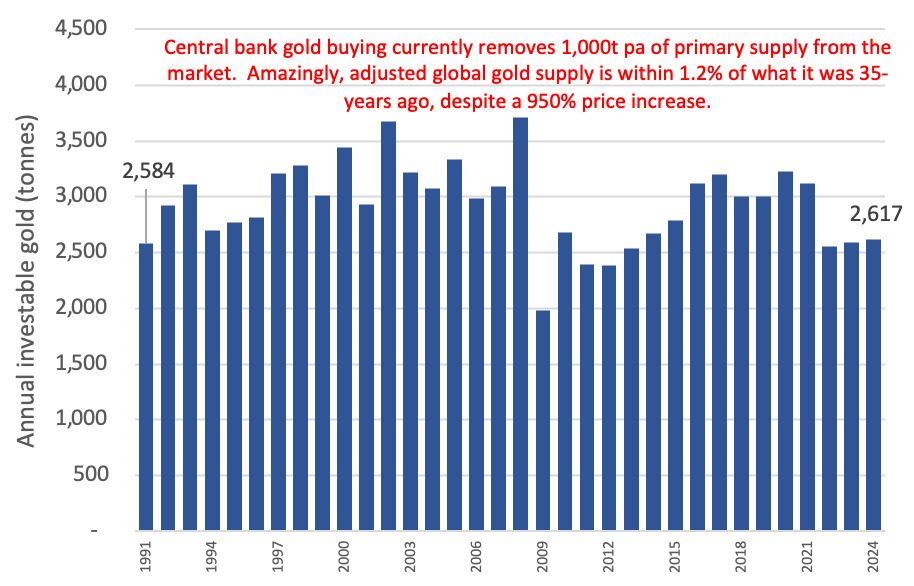
Although the growth in global gold production has been an incredibly modest 1.2% CAGR over the past 35 years, the growth in investable supply has, in fact, been almost zero.
Following the GFC in 2009, Central Banks (CBs) became large net buyers of bullion, with 2024 being the third year in a row that they purchased >1,000 tonnes of gold, effectively removing it from the supply chain. If you add 1991 CB gold sales to primary gold production, then
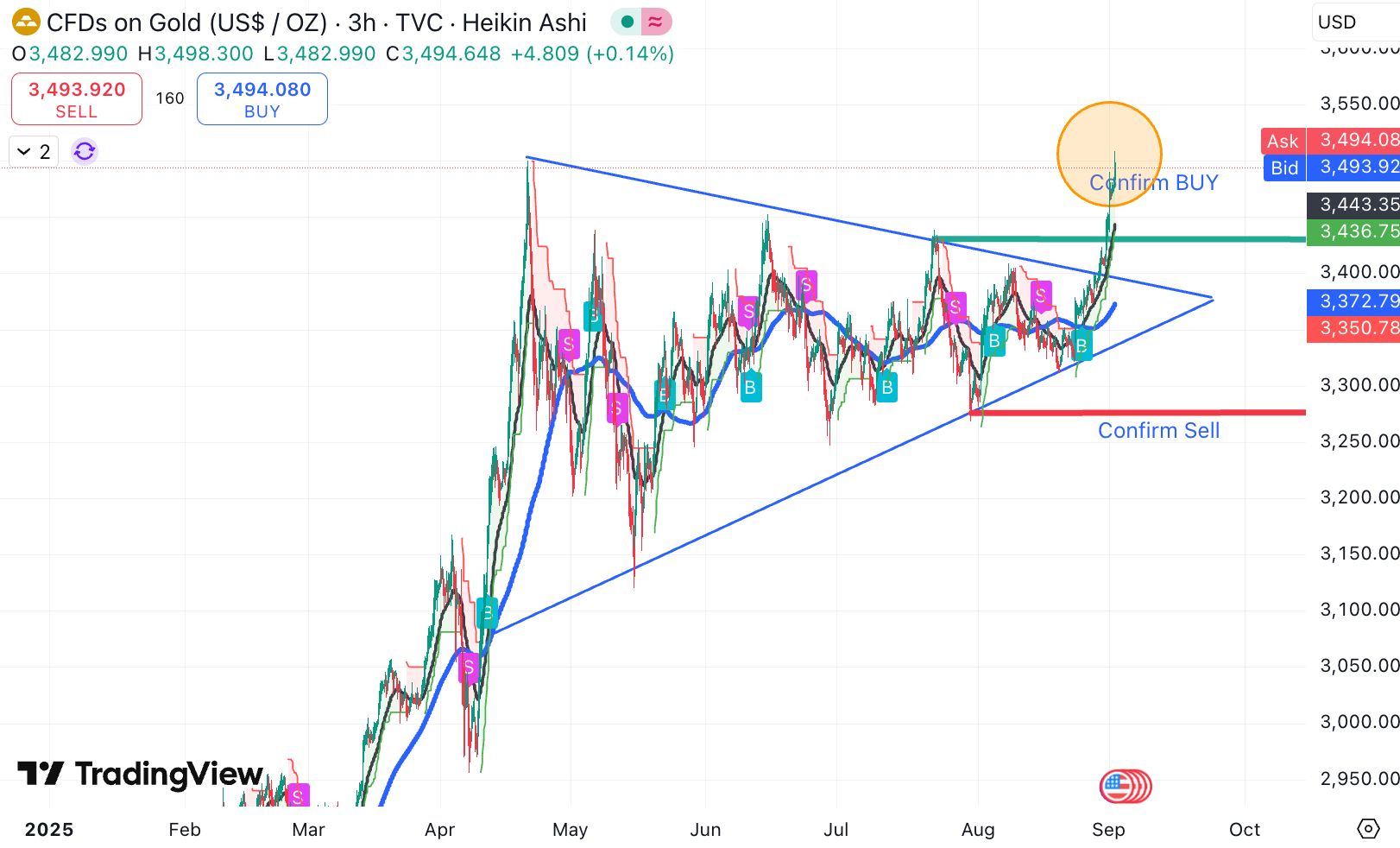
After a five month consolidation – it’s hard not to get excited! Although we expect silver to outperform over a five-year period.
After a five month consolidation - it's hard not to get excited! Although we expect silver to outperform over a five-year period.
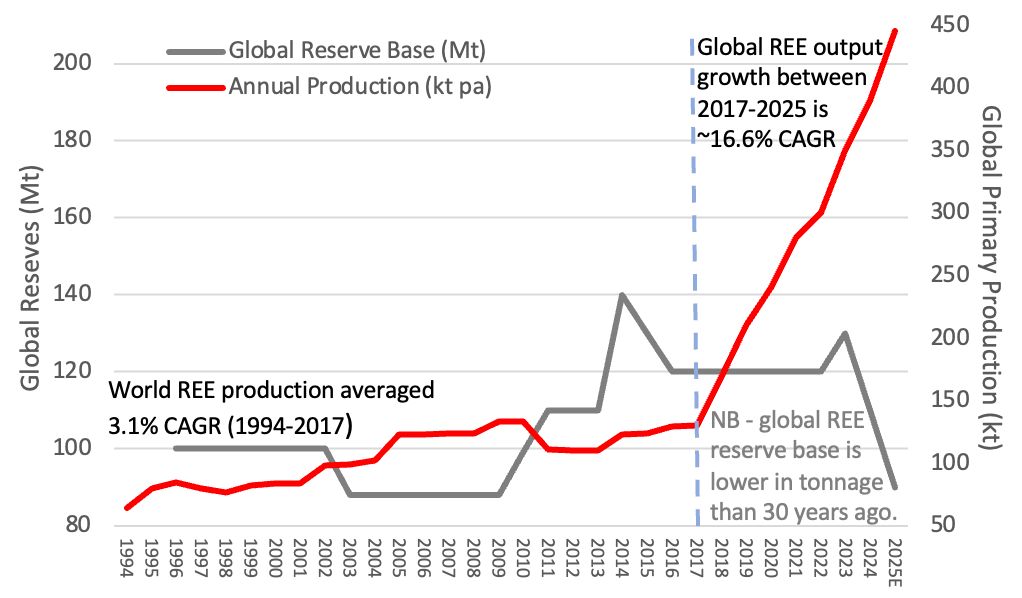
The correct context for discussing REEs revolves around their inherent necessity, with additional cost added if supply is suddenly constrained.
Historically, growth in REE demand was a boutique 3% pa. Although it never made a significant portion of any individual product by weight, value, or volume, REEs were often critical for a piece of equipment to function effectively. A modern ICE vehicle, for example, typically requires more than 200 permanent
Colleagues liken various REE elements such as Y, La, Nd as having similar crustal abundances as Cr, Ni, Zn or Mo; concluding that REEs are, hence, not that rare at all. We disagree.
After spending several decades looking at various REE deposits, taking into account the transitioning demand in various metals; our world view remains that REEs are, geologically speaking, rare, especially if you take into account prevailing economic parameters. Notably, several large producers are high-grading their oxide resources, meaning that current
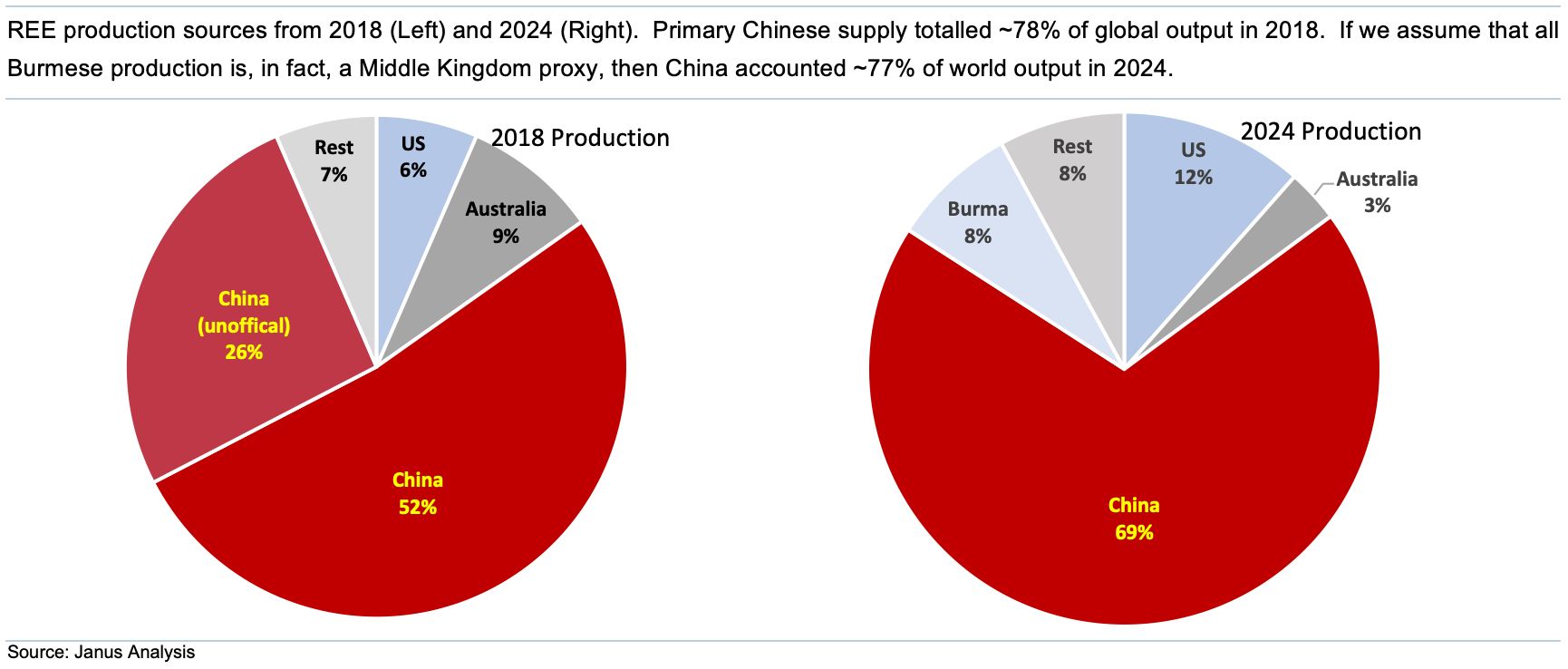
In reality, Chinese REE supply is still pre-ordained with tonnages consistent with perceived demand.
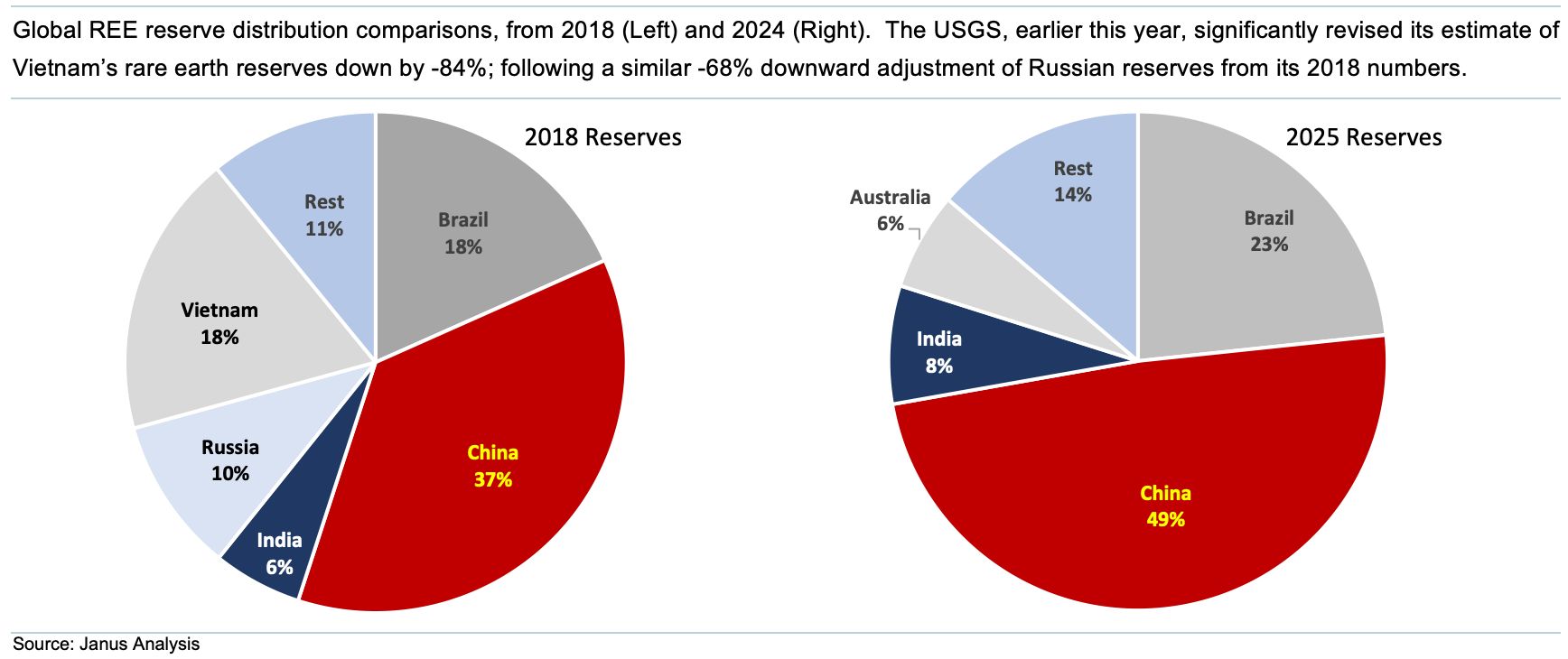
Despite Western concerns about China dominating primary REE production, it was assumed that market forces and investment would eventually alter the mined output equation. In the intervening six years since 2018, despite a ~162% increase in global tonnage, China's hold on the market seems intractable.
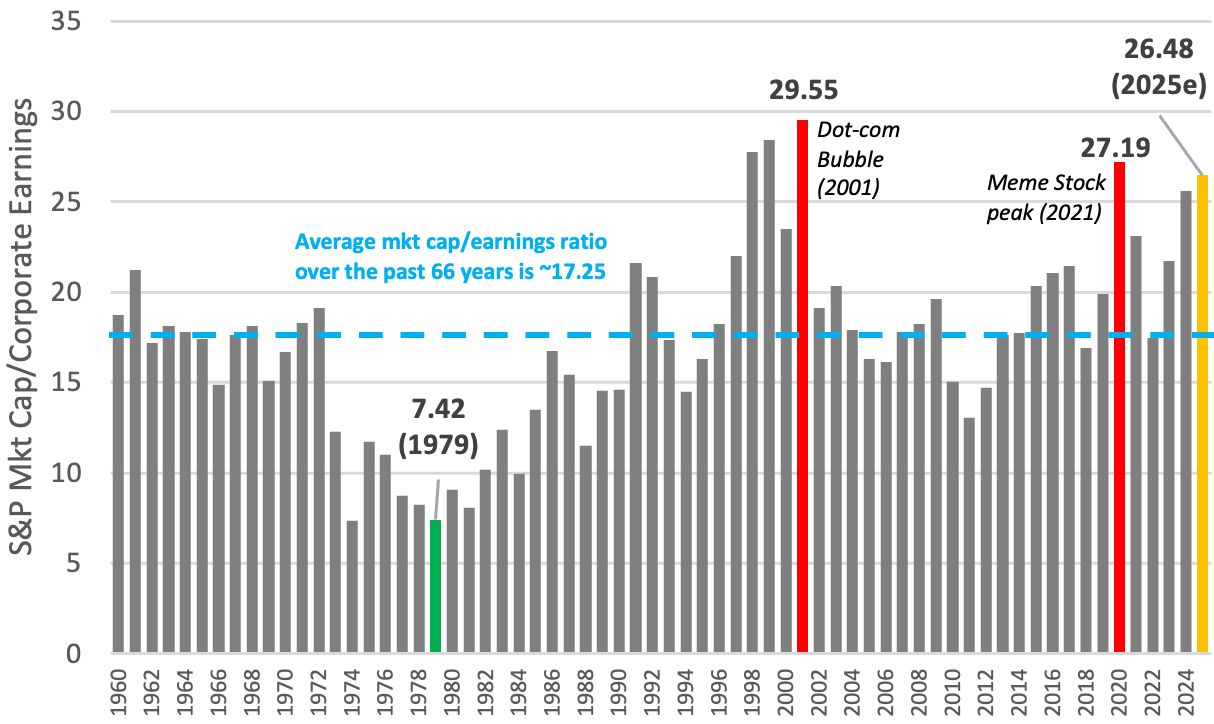
Approaching dangerous levels… no need to panic yet.
Annual S&P market cap. (calc. on 29/07/21) divided by US corporate earnings. The current ratio (26.5) is only bettered (so far) by the Meme Peak in 2021 and the Dot-com Bubble in 2001. On the other end of the spectrum is 1979, an era dominated by the legendary Chairman,
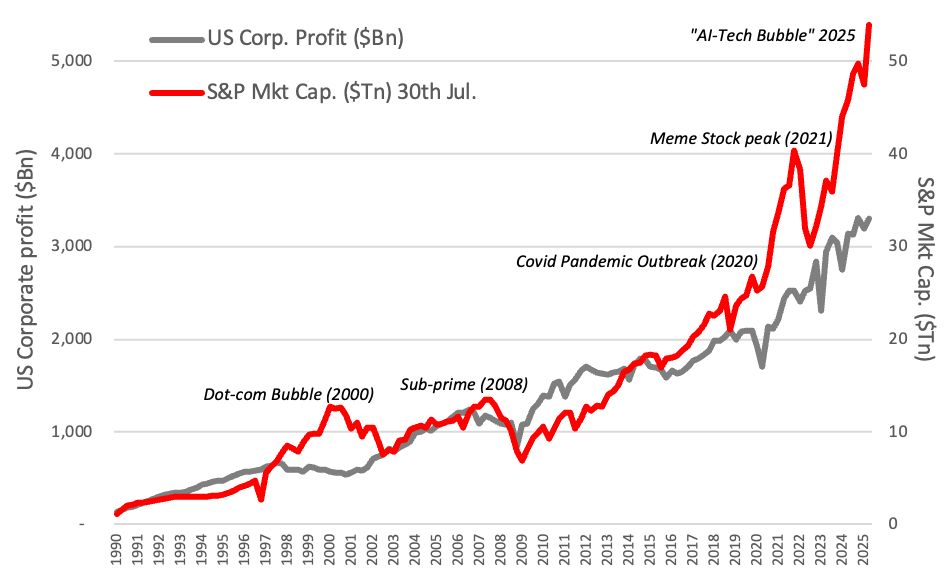
We wonder if this global AI infrastructure build is not dissimilar to the Great Britain Railway mania of the 1840s
It is our fundamental belief that the collective market valuation (as represented here by the market capitalisation of the S&P) should be correlated (over time) with the profitability of the companies listed - an old-fashioned idea, we know. US corporate profitability is climbing rapidly, up 94%, after stagnating
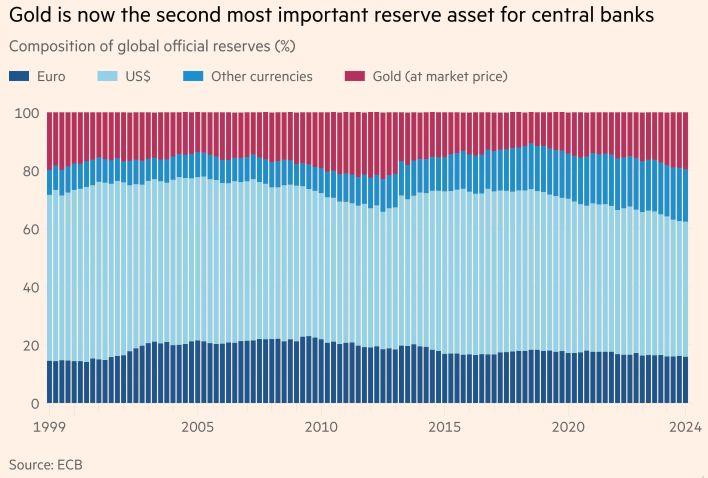
Gold Overtakes the Euro
Gold overtakes the Euro as the world’s second most important reserve asset. How long can the USD be considered the global reserve currency given its current debt trajectory?
Modern nuclear power plants can expect to have a realistic lifespan of 80 to 100 years – whereas an equivalent wind turbine project will have to be assembled/disassembled four to five times.
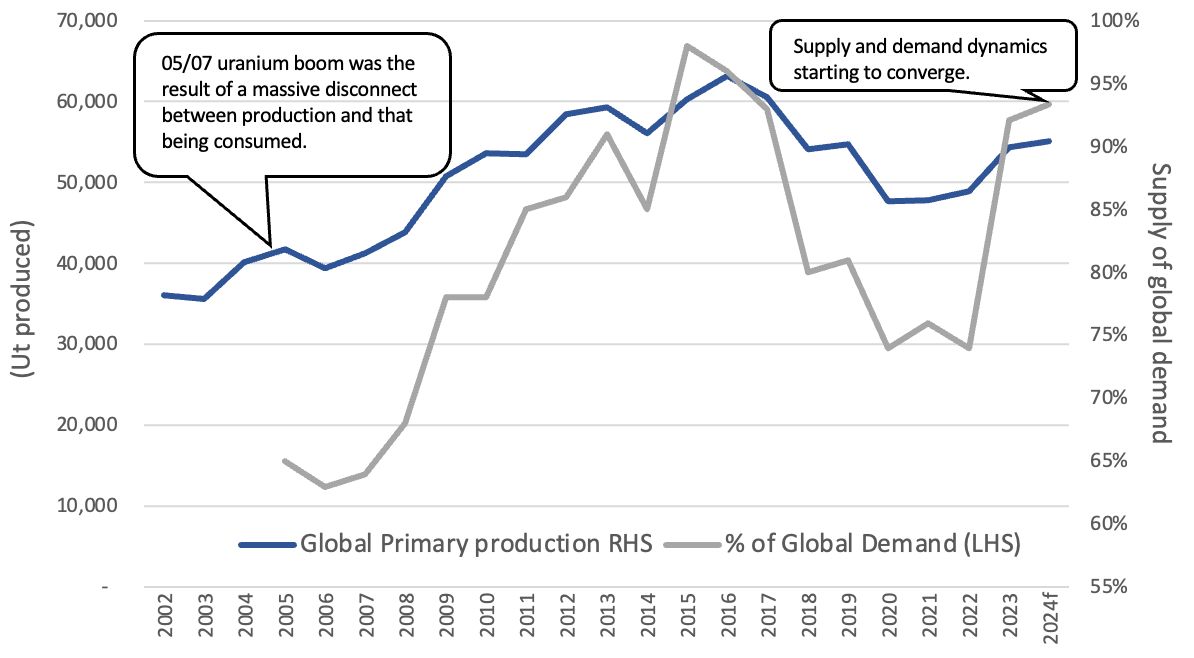
Global uranium production (left) versus primary supply (right). In 2022 primary supply met ~74% of end use demand, the rest coming from existing stockpiles. Using a variety of sources, we now estimate that sector dynamics have improved markedly since, with 93% of 2024f consumption was able to be
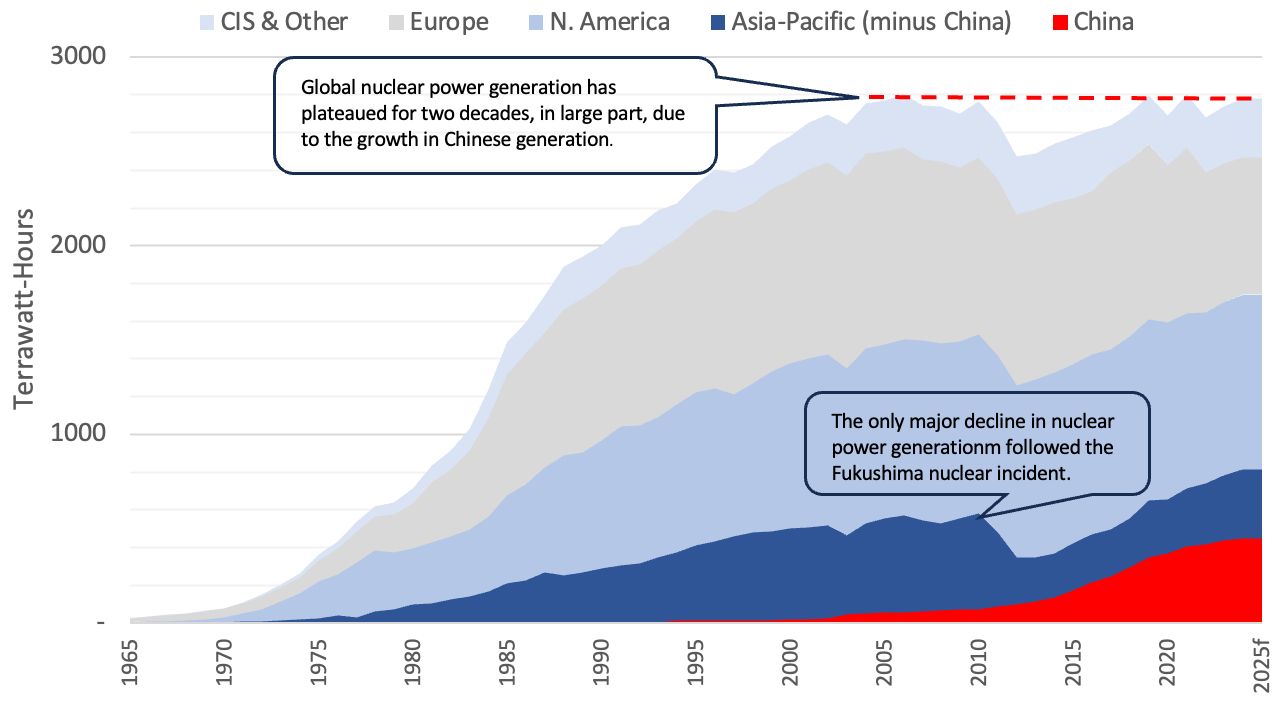
According to the IAEA, in 2004, nuclear power made up 16% of global electricity generation, with 24% in the OECD.
Gross nuclear energy consumption by region in Terawatt-hours (not accounting for cross-border electricity transfers) from 1965 to 2025f. As observed, global nuclear electrical power generation has remained relatively stable for over two decades; yet, in that time period, estimated world electrical generation has increased by 139% from 12.93
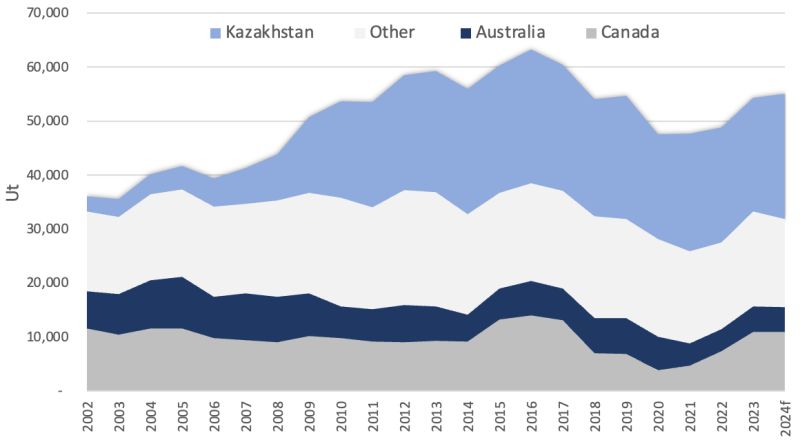
Official IAEA production numbers for 2024 should be released in several weeks. According to our numbers, global output is down ~13% from its 2016 peak.
Uranium supply remains a Kazakhstan tale, with a CAGR of 10.1% since 2002, as opposed to a decrease of -0.2% for the rest of the world.
Critical to the success of mercantilism is its ability to secure raw materials in order to value-add.
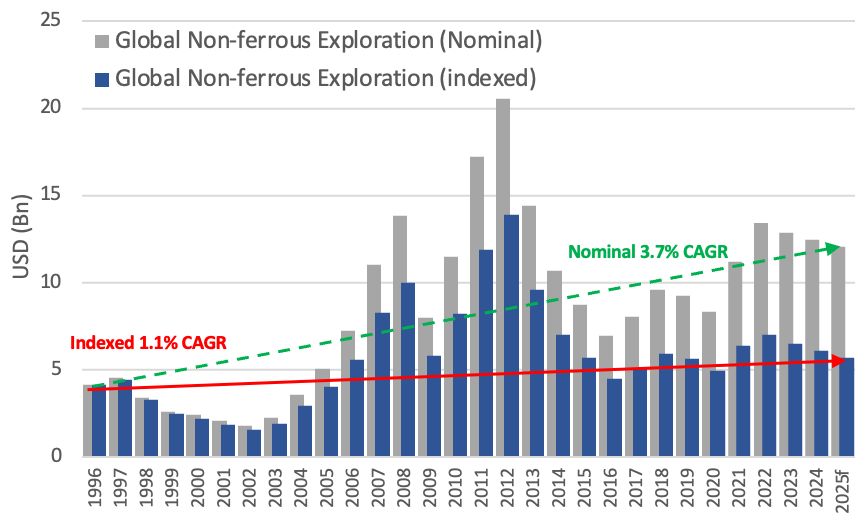
It may surprise that global exploration expenditures in the coming year (2025f) are only 37% higher, in real terms, than what they were 30 years ago! Despite the advent of commodities super cycle associated with the economic rise of China, to become the global manufacturing power house it