
Flashnote Commentary
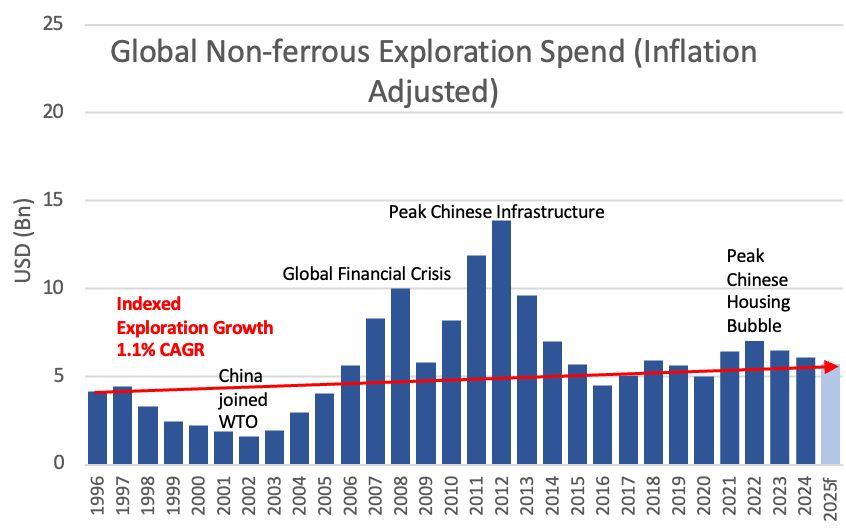
A growth story, this is not…
Adjusting non-ferrous exploration expenditure for inflation (using US CPI), one observes that indexed growth in minerals replacement outlay is a third (i.e. 1.1% CAGR) of that implied in nominal terms.
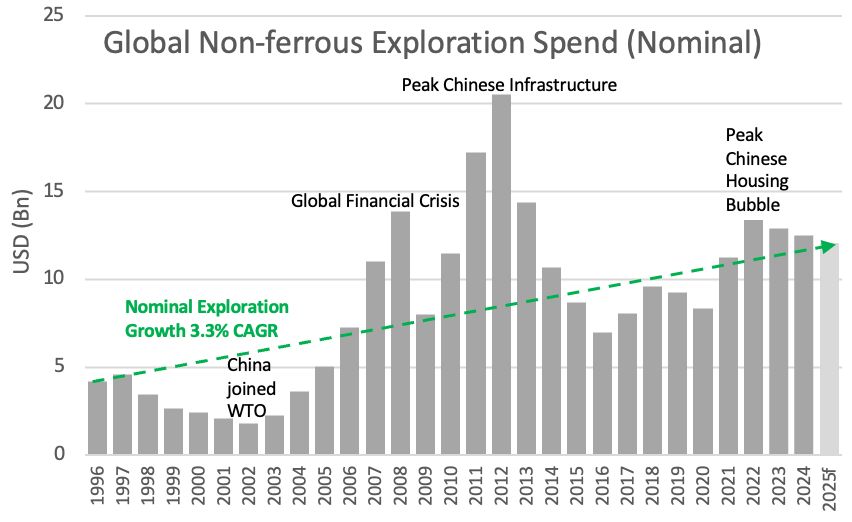
Remind that if it isn’t grown, its mined. Resources remain the fundamental building block of a modern economy.
Minerals exploration is the lifeblood of the mining industry. Global non-ferrous exploration expenditure, in nominal terms, has been growing at ~3.3% CAGR over the past three decades.
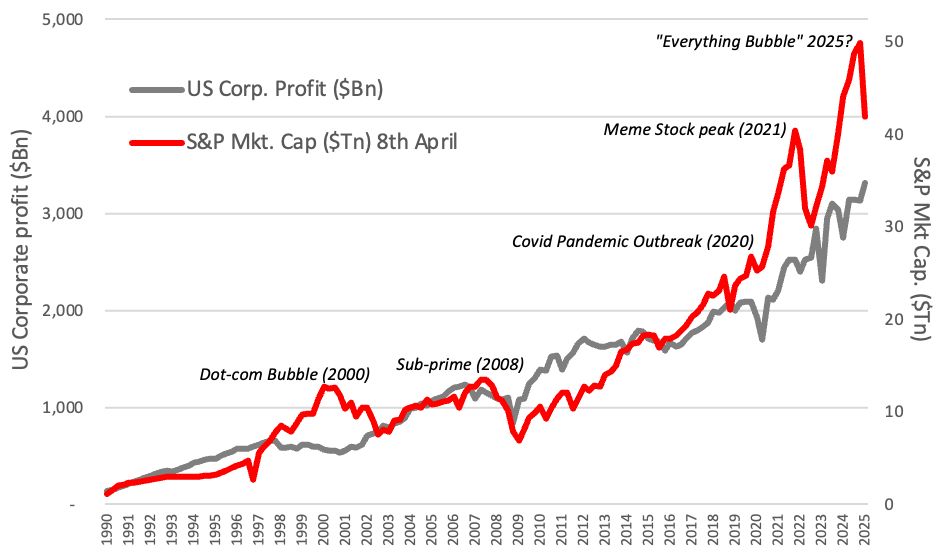
Are we about to see a Bull Trap?
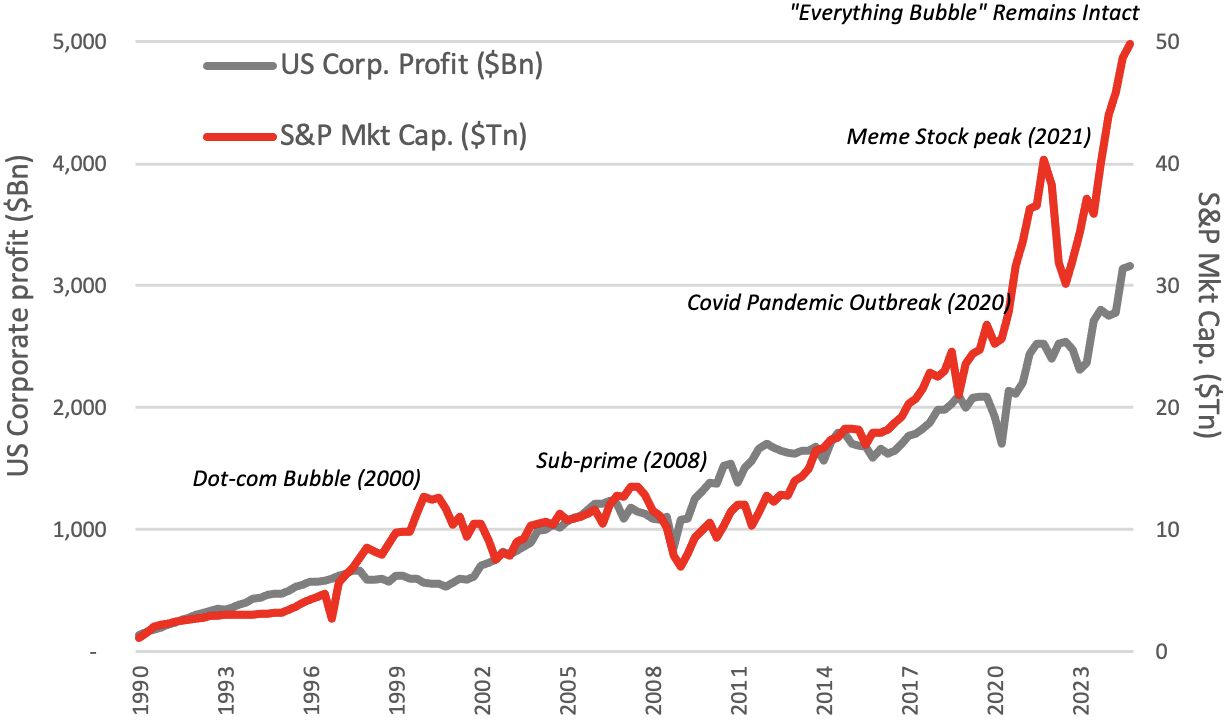
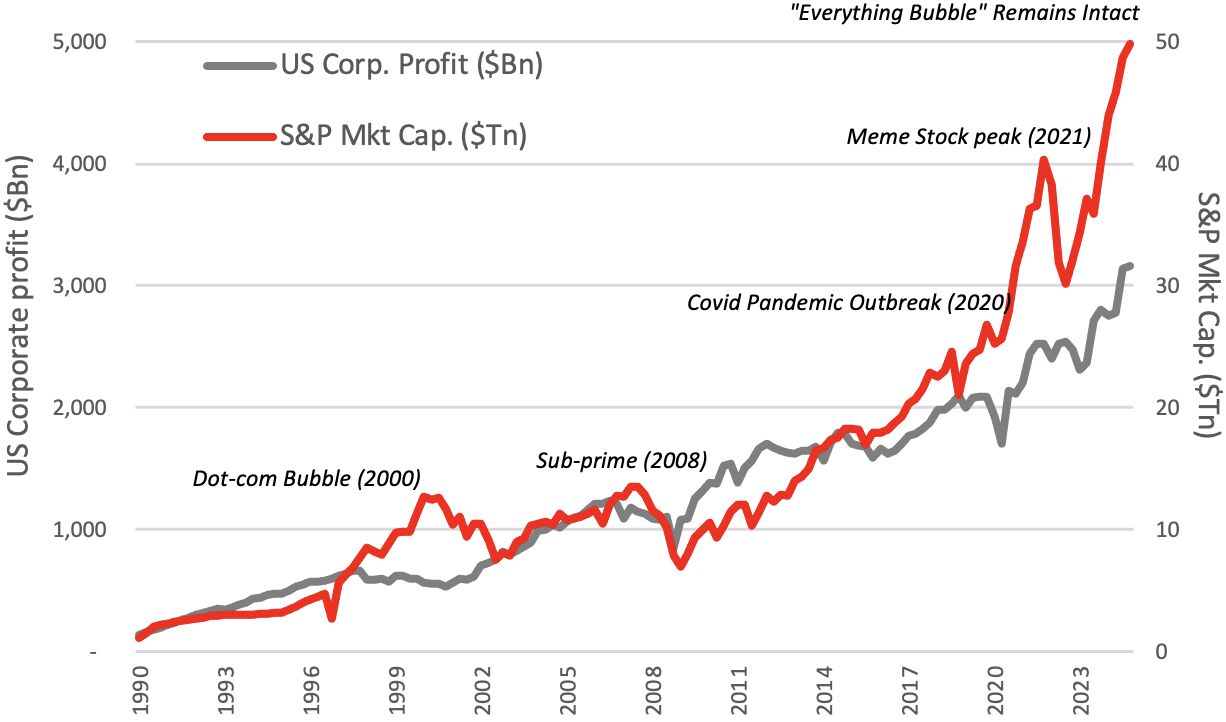
Even after the current corrective phase, the lack of valuation correlation between capitalisation of the S&P500 (calculated 8th April) and corporate profitability, suggests that the market could still fall another 31% before it reaches long term fair value. Or will it? Bob Farrells (Point 4) suggests that exponential
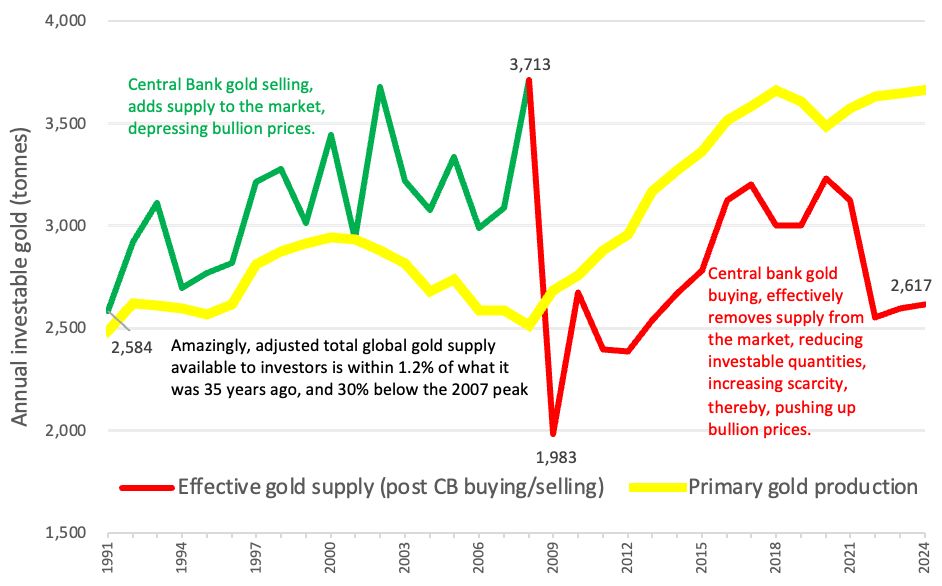
Central bank buying is arguably the single largest determinant of gold prices moving forward
Investors underestimate the role of Central Banks (CBs) in global gold supply. 2024 was the third year in a row that central banks purchased >1,000 tonnes in bullion - effectively removing it from the supply chain. The recent ~60% price rise was not the result of investor speculation, because fund
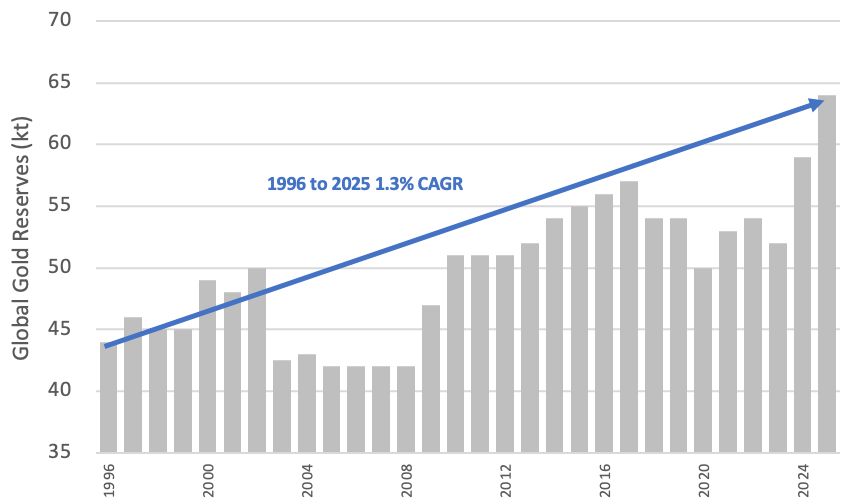
M&A Targeting Mid-Tier Gold Producers
The >85% increase in the gold price over the past 30 months is starting to have an impact on previously uneconomic resources, which are steadily being revalued (see graph below). Critically, a large number of these deposits are associated with smaller companies, who are often unable to capitalise
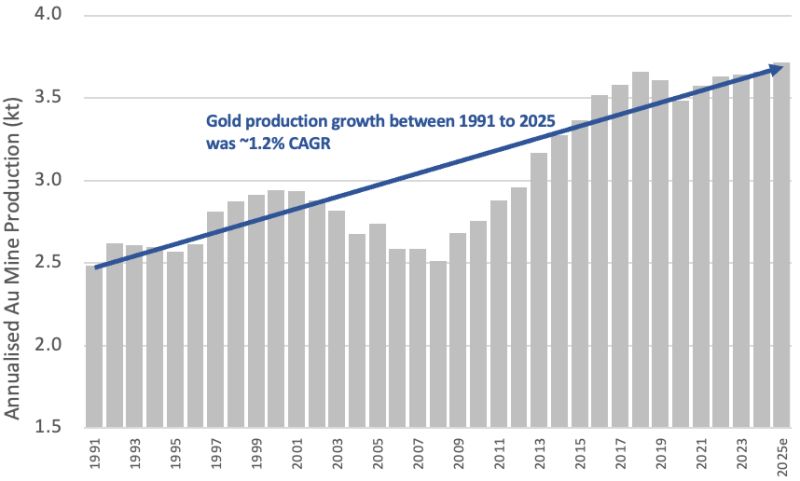
Gold is Rare…
Despite bullion prices increasing >185% since the beginning of 2016, global output has only increased by 5.7%, highlighting how tenuous growth is in primary gold production. Equally, looking over a longer time period, the gold price has increased >860% since the beginning of 1991, yet global mine supply
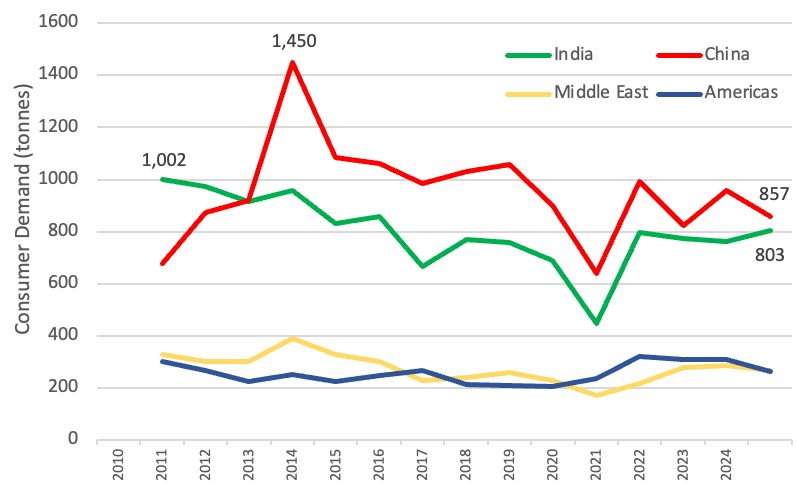
Chinese & Indian Gold Demand
Despite the gold price increasing >170% over the past 15 years, Indian gold demand has dropped by 20% (using WGC data); which is even more remarkable, when one considers the Indian Rupee lost ~45% of its in-situ value against the USD over that time period! Chinese gold demand
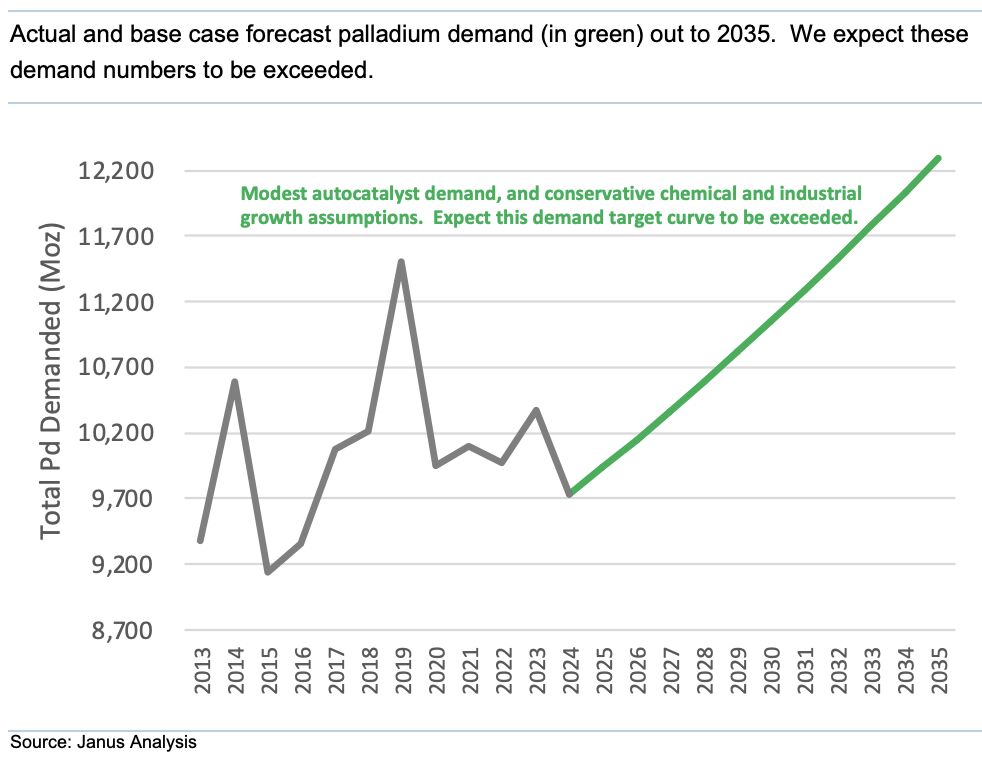
Palladium Demand
Palladium demand forecast to grow 26% over the next decade, with production dominated by Russia and South Africa. Russian production sustainability under question, with significant price rises required to incentivise additional supply.
Japanese Stock Market
Does anyone recall that for a couple of months in 1989, the Japanese stock market made up 50% of the value of global share market; that 15 of the 20 most valuable companies in the world, were Japanese? History may not repeat, but it certainly rhymes... Just realised we have
Platinum Demand
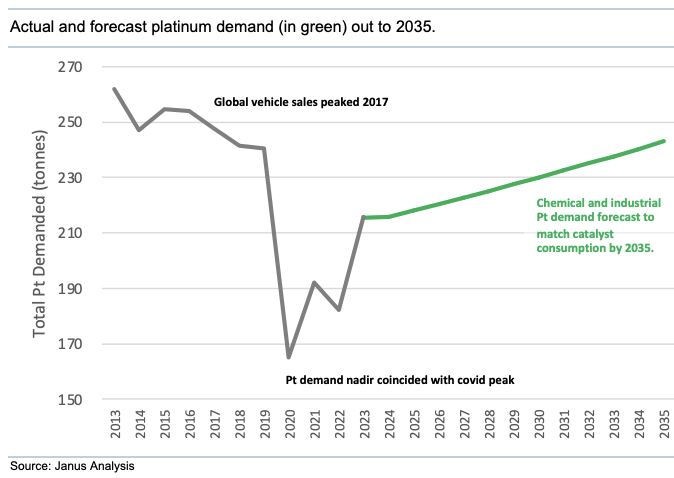
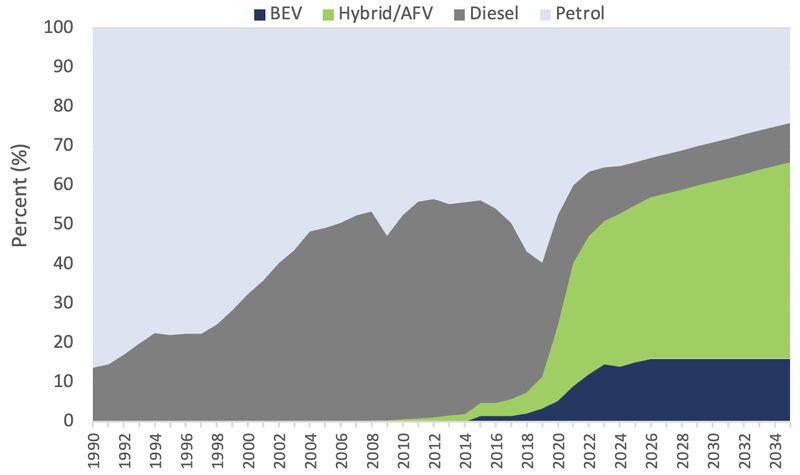
Despite declining 18% over the past decade, platinum demand is forecast to reach its nadir during 2025, after which, consumption will begin to grow steadily. Our model suggests that numerically, diesel vehicles will stabilise at current levels (growth rate ~0.7% pa), with any future declines in percentage terms being
Transition from Diesel
The transition in Europe from diesel vehicles to alternatives started in 2016, before the arrival of the EVs; when it became increasingly clear to the consumer that there were health risks associated with carcinogens and particulate matter – without, we should add, any EU or national government mandate. Our
Market Bubble
In a recent missive, we noted that although US profits are growing, they are highly skewed. Outside the top 20 stocks on the S&P 500, EPS has largely been flat, with the bottom 50% strongly negative YTD. Despite that, total market capitalisation has jumped >38% in under a year (red).